The short answer
Plan your offsite's transport as three separate jobs: the arrival, the days at the venue and the departure. Group arrivals by landing time rather than headcount, keep a vehicle at the venue only for the moments your agenda needs one, and plan the departure first, because it's the one time everyone leaves at once for different flights. Then confirm your attendee list and flight details early, well before the first pickup.
If you're planning a January kickoff, this is the month
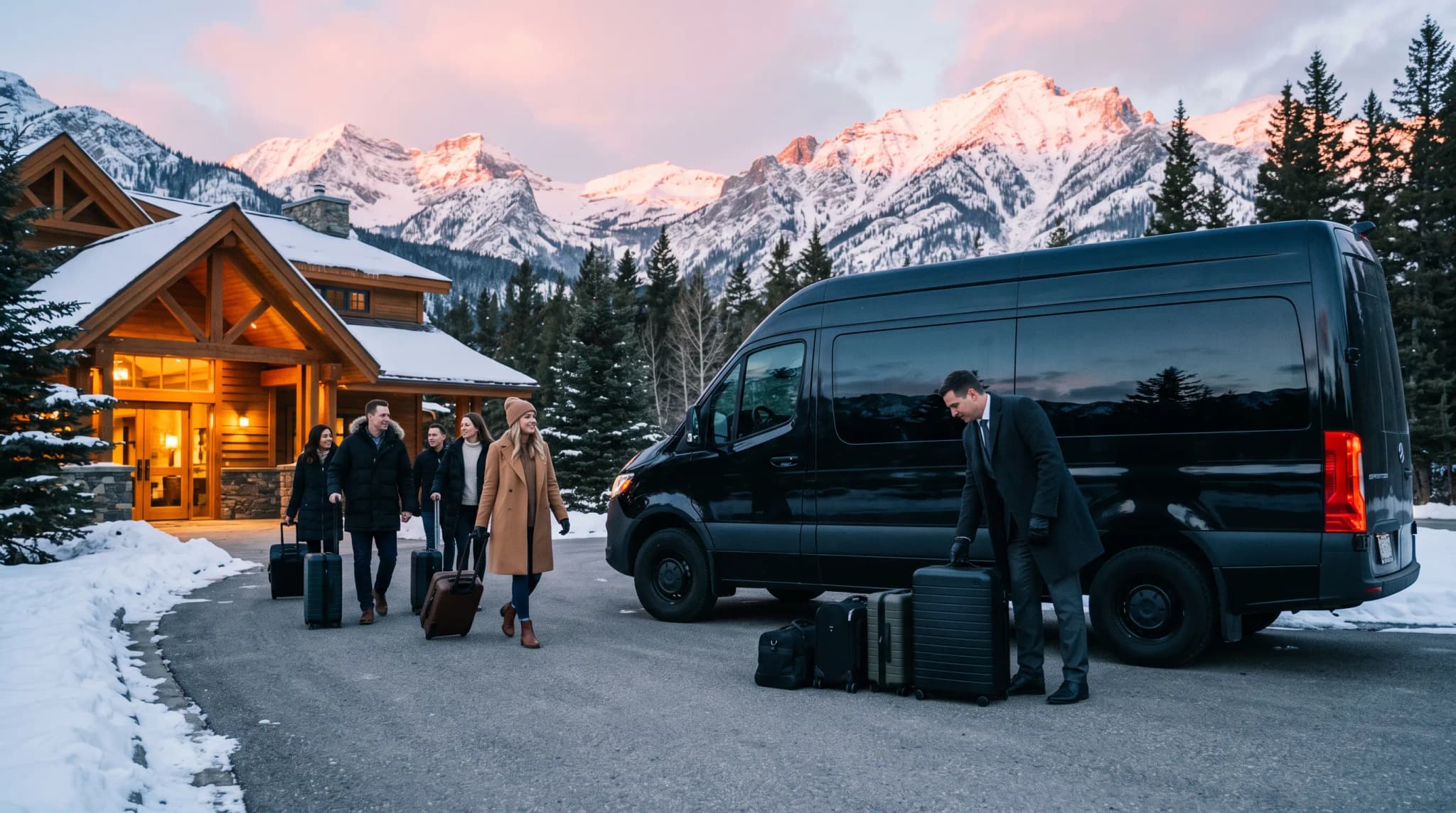
For many companies, January is sales kickoff season, and the planning happens in November. Many of those kickoffs, leadership retreats and strategy sessions take the team out of town: Whistler from Vancouver, Banff or Canmore from Calgary, Blue Mountain or Muskoka from Toronto, or Niagara for a shorter trip.
If that's on your desk right now, you're in the right place. This guide walks you through the transport side, step by step, so your team arrives relaxed and gets home on time.
Why an offsite needs its own plan
An offsite looks like a small conference, but it behaves quite differently.
- One venue, a long way from the airport. Calgary to Banff is about an hour and a half by road, and Vancouver to Whistler about two hours. Every transfer is a long one, and a missed pickup can't be solved with a quick taxi.
- Everyone arrives together and leaves together. At a conference, people come and go across several days. An offsite squeezes its arrivals and departures into a few hours at each end.
- It's your team and your event. If a vehicle is late, the whole team waits, and the first session starts late.
- Out-of-town trips are quoted individually. Resort and long-distance transfers aren't priced instantly online, so leave a little time in your planning for written quotes.
The arrival: group people by landing time
Start your manifest from flights, not names. For each attendee, you'll need the airport, the flight number and the scheduled arrival time. Then follow these steps.
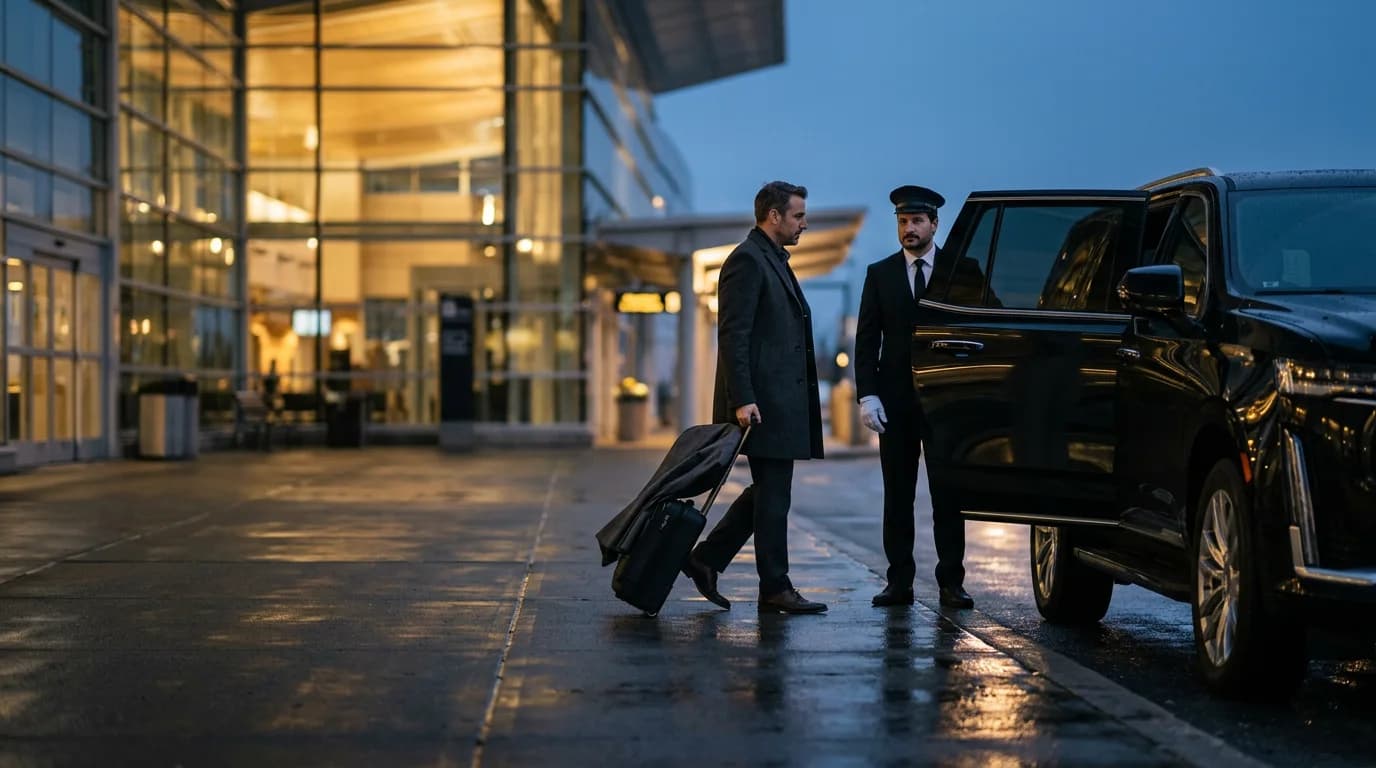
- Group flights into waves. Flights that land close together share a vehicle. A flight that lands much later gets its own car, rather than keeping a full vehicle waiting at the airport.
- Don't make a full vehicle wait for one late flight. With Canadian Limos, every airport pickup includes flight tracking and a grace period after landing. Waiting beyond that is billed, at $300 an hour for a Sprinter, and ten people waiting for one delayed flight also lose their afternoon.
- Give international arrivals their own wave. Customs adds time before they reach the meeting point, and the delay varies from day to day.
- Size each wave by its bags. Offsite luggage is heavier than a business trip's: several days of clothes, outdoor gear and, in winter, boots and coats. Our vehicle sizing guide explains how to count.
- Name a lead for each wave. Give that person the chauffeur's details and the rest of the group's flights, so someone on the ground always knows who is still coming.
At the venue: book for moments, not for days
Here's a pleasant surprise for your budget: many offsites don't need a vehicle between the arrival and the departure at all. If the venue is the whole agenda, a car on standby mostly waits.
Instead, book hourly service for the specific moments that need it:
- a team dinner or an activity away from the venue;
- a client visit or a meeting in town;
- a leader who has to leave partway through.
An hourly booking reserves a vehicle and chauffeur for your group for a set block of time, so the plan can shift inside that block without rebooking.
And since someone usually has to leave a day early, book that transfer when you build the manifest, not on the morning they need it.
Winter: check the road, not just the forecast
The highways to mountain and cottage-country venues can close, or slow to a crawl, in winter weather. A few simple habits keep everyone safe and on schedule.
- Check the province's official road service the day before each transfer: DriveBC for the Sea to Sky Highway to Whistler, 511 Alberta for the Trans-Canada Highway to Canmore and Banff, Ontario 511 for routes north of Toronto, and Québec 511 in Québec.
- Add a weather buffer to the departure schedule, not only the arrival. A late arrival costs a session. A late departure costs flights.
- Know the winter tire rules. They differ by province, and in BC by route. Our winter tire guide sets them out clearly.
The departure: plan it first
The last morning is the trickiest part of offsite transport. Everyone leaves within a few hours, for different flights, often right after a closing session that runs over. A little planning here makes the whole event end on a high note.
- Work back from flight times, not from the end of the agenda. Take the airline's recommended check-in time, add the drive and a weather buffer, and that's when each wave leaves.
- Put the earliest flights in the first vehicle, whoever is on them. Departure time decides the order, not seniority.
- Agree the overrun rule before the offsite. If the closing session runs late, the first wave still leaves on time. It's much easier to decide that in advance than in the room.
- Confirm the departure plan the day before, with each wave lead and with the booking team.
Lock the list early
Your transport plan is only as good as your attendee list. Every name, flight and bag count shapes the arrival waves, the vehicles and the departure order, so a late change can ripple through the whole plan.
- Set your registration deadline well before the first pickup, and collect each person's flight details at the same time as their name.
- Send one final list, rather than a series of small updates. It's easier for everyone to check, and nothing gets lost between versions.
- If something changes after that, tell the booking team straight away. The sooner a change is known, the more calmly it can be worked into the plan.
Who owns the plan
- One owner on your side. One person holds the manifest and is the only one who sends changes. Two people sending different versions of the list is one of the most common causes of offsite mix-ups.
- One contact on the provider's side. With Canadian Limos, every transfer, hourly booking and departure for your offsite sits under one booking agreement, with one point of contact before, during and after the trips.
- A one-page run sheet. List the waves, the vehicles, the chauffeur contacts, the venue's address and entrance, and the departure order. Share it with every wave lead.
In short
People remember an offsite's transport for two moments: the first hour and the last. Plan the departure first, group arrivals by flight, keep cars at the venue only when the agenda needs them, and lock the list early. Do that, and your team will remember the offsite, not the logistics.
Planning a kickoff or retreat? Request a quote with your venue, dates and flight list, and we'll help you shape the plan.
Frequently asked questions
When does the attendee list for an offsite need to be final?
As early as you can, and well before the first pickup. Every name, flight and bag count shapes the arrival waves, the vehicles and the departure order. Set your registration deadline early, collect flight details with each name, and send one final list rather than a series of updates.
Should offsite attendees share vehicles from the airport?
Yes, when their flights land close together. Group arrivals into waves by landing time and size each vehicle for the wave's bags. Give international arrivals their own wave, because customs adds time, and avoid holding a full vehicle at the airport for one late flight.
Do we need a car at the venue for the whole offsite?
Usually not. If the agenda keeps everyone at the venue, a standby vehicle mostly waits. Book hourly service for the moments that need it, such as a dinner in town, an activity or a leader who has to leave early, and book early departures when you build the manifest.
How do we stop winter weather from disrupting the departure?
Check the provincial road service the day before: DriveBC for the Sea to Sky Highway, 511 Alberta for the route to Canmore and Banff, and Ontario 511 or Québec 511 elsewhere. Build a weather buffer into departure times, and put the earliest flights in the first vehicle.