The short answer
Choose the vehicle by luggage first and headcount second. A Luxury Sedan takes up to 2 passengers and 2 bags. A Luxury SUV takes up to 6 passengers and 6 bags. A Jet Sprinter takes up to 7 of each in larger seats, and an Executive Sprinter up to 14. A car that seats everyone but can't take the luggage is the wrong car.
Most vehicle mix-ups in corporate travel come from asking one question in the wrong order. "How many people?" gets asked when the trip is booked. "How many bags?" gets asked at the curb, when it's too late to change the answer.
Two travellers sounds like a sedan. It is, until the two travellers are flying home after a week at a trade show with a suitcase each and a case of samples.
Why headcount is the wrong unit
In business travel, the seats usually aren't what runs out first. The luggage space is. A few everyday examples:
- Two partners coming back from a three-day hearing, each with a suitcase and a box of binders. That's four items, so a sedan won't do, even though there are only two passengers.
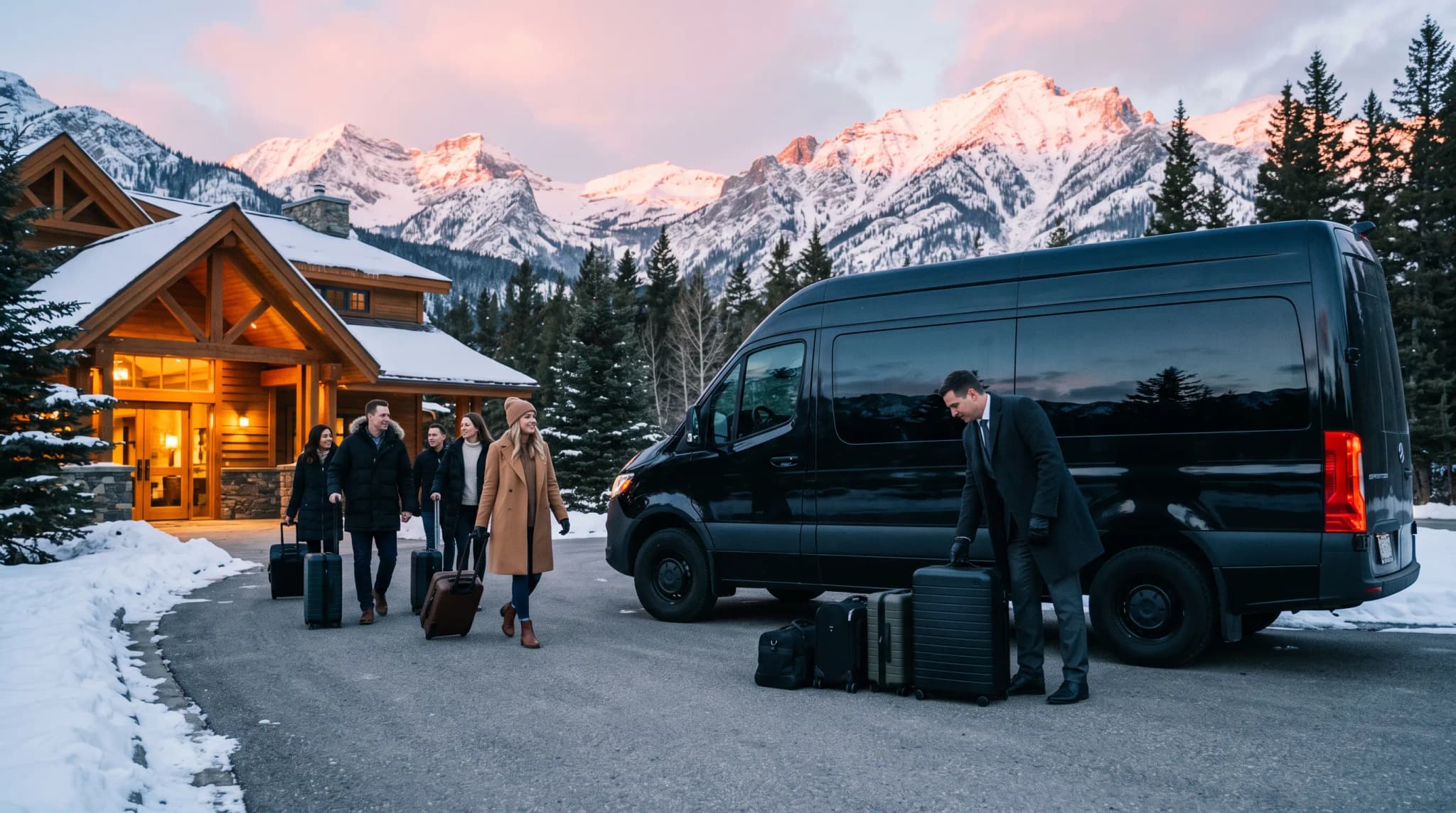
- A sales team of four with roller cases and a pop-up display stand. Four people fit an SUV easily. The display stand decides whether everything else fits too.
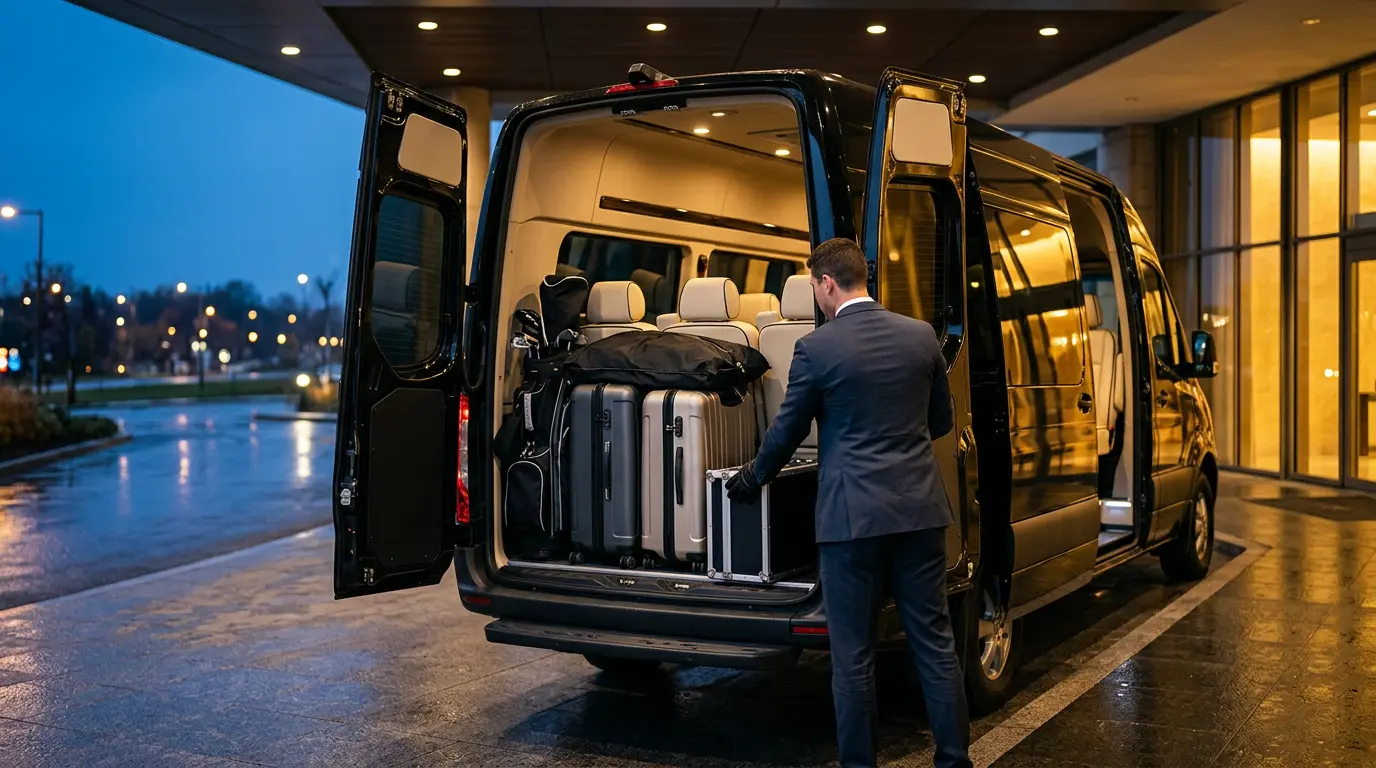
- One executive heading to a client golf day with clubs and an overnight bag. One passenger, but a golf bag takes more room than a suitcase.
- A visiting client arriving from overseas with two large cases. By the numbers that fits a sedan, with no space to spare.
The fix is a habit, not a rule. Ask how many bags before you ask how many people.
What each class takes
Canadian Limos books vehicles by class, and each class has a stated limit for passengers and for bags.
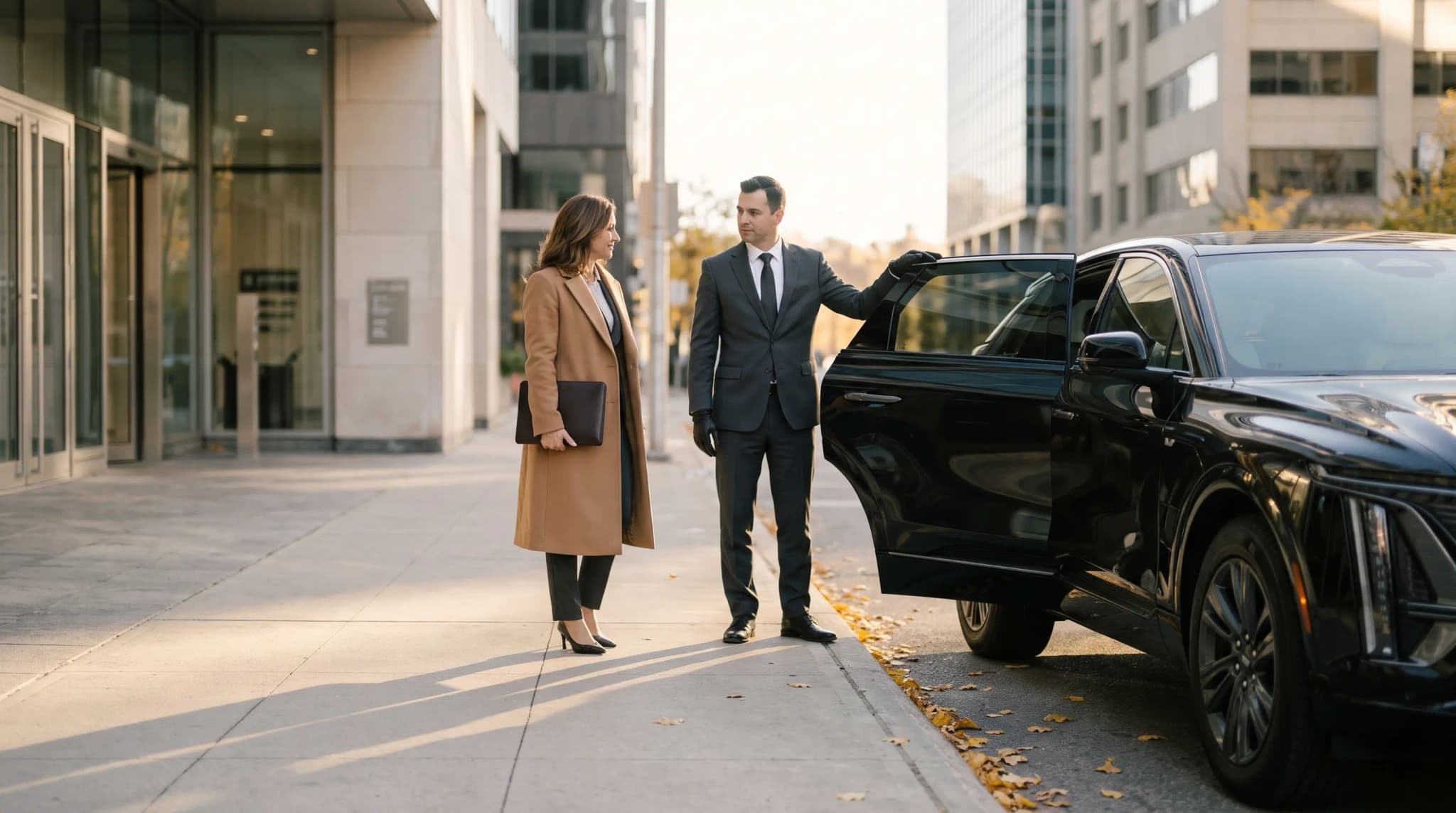
- Luxury Sedan (Lexus ES or similar): up to 2 passengers and 2 bags. Right for one or two travellers with ordinary luggage.
- Luxury SUV (Cadillac Escalade or similar): up to 6 passengers and 6 bags. The usual choice for three or more people, or for one or two with heavy luggage.
- Jet Sprinter: up to 7 passengers and 7 bags, in fewer, larger seats. For a small senior team that wants to travel together in comfort.
- Executive Sprinter: up to 14 passengers and 14 bags. For groups, team moves and shuttles between a hotel and a venue.
Sedans and SUVs can be booked online for eligible point-to-point trips. Sprinters are quoted by the reservations team.
Two details are worth knowing. First, the limits are maximums. A vehicle booked to its limit on both people and bags has no room for anything picked up along the way. Second, vehicles are assigned by class, not by make or model. "Or similar" means another vehicle of the same class, and Canadian Limos' terms allow a vehicle of the same or a higher class to be substituted where necessary.
What counts as a bag
There's no industry standard for a "bag", so count in the way that keeps you out of trouble: anything that has to ride in the luggage space rather than with the passenger.
- Suitcases and large roller bags: one each.
- Carry-on roller cases: count them too. In a full vehicle, every wheeled case needs a place.
- Garment bags: count each one. They need to lie flat.
- Golf bags, skis, snowboards and other long items: list them separately, by number and type. They take more room than a suitcase.
- Display stands, sample cases and boxes of printed material: list them separately, with their size. These are the items that get forgotten when the trip is booked.
- Laptop bags and handbags that stay with the passenger usually don't need counting.
Mobility aids, child seats and pets aren't luggage. Each is its own request when you book, and each can change which vehicle is right. A child in a child seat counts as a passenger.
One SUV or two sedans
When a group outgrows a sedan, the reflex is to add a second sedan. For three to six people, one SUV is usually the better booking.
- It costs less. You pay for one vehicle and one chauffeur instead of two. In the Toronto area, an SUV's fare is well below the cost of two sedans on the same trip, and so is its waiting time: $150 an hour for an SUV, against $120 an hour for each sedan.
- It arrives once. Two cars can pull up minutes apart, and the first group ends up waiting in the lobby for the second.
- It's one set of instructions. One chauffeur to brief, one pickup to confirm and one vehicle to follow.
- The group stays together. For a client visit, or a team arriving at a meeting, arriving together matters.
Two vehicles are still the right call in some cases.
- The group splits up, with different destinations or different departure times.
- Some people shouldn't share a car. Opposing parties after a negotiation are one example. Some travel policies also limit how many senior leaders ride in the same vehicle.
- The luggage won't fit even in an SUV. Then the answer is a Sprinter.
Groups of seven or more
Above six people, the choice is between one Sprinter and several SUVs.
- One Executive Sprinter keeps a team together: one pickup, one drop-off, one chauffeur. It's the better booking when everyone goes the same way at the same time, such as a hotel-to-venue shuttle or a team dinner.
- A Jet Sprinter suits a smaller senior group of up to seven that wants larger seats and room to talk on the way.
- Several SUVs are more flexible when the group will split during the day, or when people land on different flights.
For any group trip, give the booking team the passenger and bag count for each pickup, not just the total. A single total doesn't say who is collected where.
Airport arrivals need the most room
Arrivals are where sizing is tightest, because luggage is at its maximum. Travellers come off the plane with the week's suitcase, the coat they carried on board and whatever they picked up on the trip.
Two habits help.
- Book a return pickup by the bags the traveller will land with, not the bags they left with. A week away usually comes home heavier than it started.
- When you're hosting, leave a margin. A visiting client with two large cases fits a sedan by the numbers. An SUV gives them room, and on a hosting trip that margin is worth paying for.
What to tell the booking team
Accurate counts let the right class be assigned before the day. Include:
- The number of passengers, including children.
- The number of bags, counted as above.
- Anything long, bulky or fragile, with its size: golf clubs, skis, display cases, instruments.
- Mobility aids, child seats and pets, each as its own request.
- For groups, who is in each pickup, and the bags for each.
A wrong count found at the curb is the one problem a chauffeur can't fix on the spot. A right count given at booking means it never comes up.
Frequently asked questions
Can three passengers travel in a Luxury Sedan?
No. A Luxury Sedan is booked for up to 2 passengers and 2 bags, so three people need a Luxury SUV, which takes up to 6 passengers and 6 bags. One SUV is also a better booking than two sedans: the group arrives together, and on the same trip it costs less.
Is one SUV cheaper than two sedans?
Yes, on the same trip. You pay for one vehicle and one chauffeur instead of two. In the Toronto area, an SUV's fare is well below the cost of two sedans, and waiting time is $150 an hour for an SUV against $120 an hour for each sedan. Book two sedans only when the group needs to split up.
What counts as a bag when booking a chauffeur?
Count everything that rides in the luggage space: suitcases, carry-on roller cases and garment bags. List golf bags, skis, display cases and boxes separately, with their size, because they take more room than a suitcase. Laptop bags and handbags that stay with the passenger usually don't need counting.
When should a group book a Sprinter instead of several SUVs?
When the group travels together, with the same pickup, destination and time. An Executive Sprinter takes up to 14 passengers and 14 bags, and a Jet Sprinter up to 7 in larger seats. Several SUVs work better when people land on different flights or split up during the day.